Fast Field Spraying: What It Really Takes to Cover Acres in Minutes
There is a moment in every growing season when the weather window closes and the crop needs something done now. Maybe it is a foliar feed going on at the right growth stage, or a fungicide that has to hit before the dew dries. In those hours, the difference between a good season and a mediocre one often comes down to how quickly you can get a product onto the field. That is where fast field spraying has moved from a nice-to-have to a genuine operational requirement.
I have spent years watching sprayers work, from trailed booms to self-propelled machines, and more recently drones. The shift has been quieter than the headlines suggest, but the practical effect is real. When someone says fast field spraying, they usually mean covering ground at a rate that was hard to imagine a decade ago, and doing it without sacrificing accuracy. It is not just about speed for its own sake. It is about timing, uniformity, and being able to react when conditions change.
What Makes Spraying Fast, and Why Speed Isn't Everything
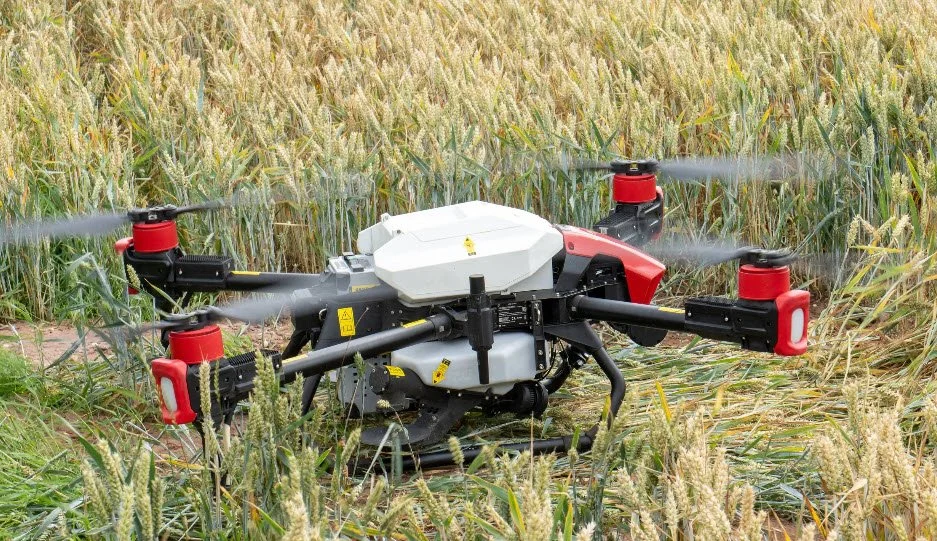
Speed in spraying comes from a few places. The machine has to move quickly, the boom or drone has to cover a wide swath, and the system has to handle the logistics of mixing, loading, and turning at the headland. A conventional sprayer with a 36 metre boom and a decent pump can cover a lot of ground in an hour, but it still has to travel to the field, fill up, and deal with tramlines. Drones have changed the calculation because they can be on site in minutes, fly over the crop without making contact, and treat areas that a ground rig would struggle to reach.
But speed without precision is just waste. The real skill is matching the application rate to the crop and the pest or disease pressure. That is where precision agriculture comes in. Using field mapping and GPS guidance, you can build a prescription that tells the drone where to apply more and where to apply less. Variable rate application is not a buzzword anymore, it is a practical way to cut input costs and reduce the risk of resistance. I have seen fields where the difference between a good and a bad patch was simply the rate map, and the drone handled it without a second thought.
Gear That Sets the Pace
The hardware side of fast field spraying has matured quickly. DJI Agras models are probably the most visible, and for good reason. They have a solid payload, good flight time, and the kind of software that makes planning a job feel almost boring, which is a compliment. XAG has pushed the autonomy angle hard, and their machines are common in large-scale operations where you need multiple units working together. Hylio has carved out a niche with smaller, more portable systems that suit mixed farms. Yamaha Motor, which has been in this game longer than most people realise, still has a strong presence in Asia and parts of Europe, especially for rice and orchards.
All of these platforms share a few core features. They use GPS guidance to hold a line, nozzle technology to control droplet size, and a pump system that can vary the flow rate on the fly. The result is that you can cover a 20 hectare field in a couple of hours, depending on the crop and the product, and do it with a level of consistency that a hand-held sprayer or a fogger simply cannot match. That is the essence of fast field spraying: not just quick, but repeatable.
The Real-World Constraints: Weather, Battery, and the Law
It would be misleading to imply that drone spraying is always the fastest option. There are days when the wind is too high, the temperature is too low, or the battery life just does not stretch to the far corner of the field. Anyone who has flown a drone in a stiff breeze knows that drift is not just a nuisance, it can be a legal problem. The Civil Aviation Authority in the UK has clear rules about where and how you can fly, and those rules affect how fast you can realistically work. A 25 kg drone is not the same as a 2 kg toy, and the permissions reflect that.
Then there is the question of what you are spraying. Agrochemicals from the big manufacturers, Bayer Crop Science, Syngenta, BASF, and others, often have label requirements that limit droplet size or application speed. You cannot just crank up the flow and hope for the best. The nozzle has to match the product, and the speed has to match the label. That is why good operators spend as much time on calibration as they do on flying. They know that the fastest way to lose a crop is to apply something incorrectly, no matter how quick the pass was.
When Drones Actually Win the Race
There are specific situations where fast field spraying with a drone is genuinely the best tool. Small, awkward fields with lots of boundaries are one. A ground rig spends half its time turning, and a drone can just lift over the hedge and come back the other way. Wet conditions are another. If the ground is too soft for a tractor, the drone does not care. I have seen a drone spray a field that a 4WD sprayer would have bogged down in, and it did it in an afternoon.
Seed broadcasting is a related job that often gets mentioned in the same breath. A drone can spread grass seed or cover crop seed at a consistent rate, and because it is not making wheel marks, the seedbed stays even. That is not spraying, but it uses the same flight planning and the same mindset. The best operators treat both jobs as part of the same service, and that is why farmers trust them with multiple tasks across the season.
The Numbers That Matter
When people ask me how fast a drone can spray, I usually give them a range rather than a single figure. A typical agricultural drone can cover somewhere between 10 and 20 hectares per hour, depending on the model, the payload, and the application rate. That is not as fast as a large self-propelled sprayer on a big open prairie, but it is more than enough for most UK farms. And the speed is not just about the flying. It is about the whole job: no driving to the field, no filling up with hundreds of litres, no compacting the soil. The drone can be on site in the time it takes to brew a cup of tea, and that is often the difference that matters.
Working With the Rules and the Research
None of this works without the regulatory framework. The Civil Aviation Authority in the UK has been pragmatic, but they are also clear that drone operators need to be trained and insured. The National Farmers' Union has been vocal about the potential of drones, but they also remind farmers that the technology is not a replacement for good agronomy. Fera Science has done work on the fate of pesticides applied by drones, and the early results are encouraging, but they also highlight the need for careful calibration and monitoring.
The agrochemical companies are paying attention too. Bayer, Syngenta, and BASF have all run trials with drone application, and they are starting to produce label recommendations that account for the different spray pattern and droplet dynamics of a rotorcraft. That is a big deal because it means the products themselves are being validated for this application method, not just the hardware. As that body of evidence grows, the regulatory path will get smoother, and the speed of adoption will increase.
Making the Call
So when does fast field spraying actually make sense? The honest answer is: more often than not, for the jobs that suit it. If you have a field that is too wet for a ground rig, a drone is the obvious choice. If you have a patch of disease that needs a spot treatment, a drone can get there faster than you can hitch up the sprayer. If you are working with a crop that is too tall or too delicate for wheels, the drone is the only option that does not damage the plant.
But it is also true that a drone is not a replacement for a conventional sprayer on every acre. For large, flat, dry fields, a modern ground rig is still very efficient. The smart approach is to have both tools available and to match the job to the machine. That is what the best operators do, and it is why they stay busy all season.
The technology will keep improving. Batteries will get better, payloads will grow, and the software will get smarter. But the core principle will not change. Fast field spraying is about using the right tool at the right time, with the right product and the right rate. When that all comes together, it is a beautiful thing to watch. And when it does not, you learn something for next time. That is the nature of farming, and that is why this work stays interesting.